
Services
Bridges
We replace missing teeth with bridges, including fixed implant-supported options planned precisely with our CBCT scanner.

Why choose us
Benefits of Bridges
Fill the Gap Naturally
A bridge replaces one or more missing teeth with a fixed restoration designed to blend with your smile.
Chew and Speak Comfortably
Restoring missing teeth helps you enjoy your favorite foods and speak with more confidence.
Keep Teeth in Place
Filling the space helps prevent neighboring teeth from drifting out of position.
Fixed or Implant-Supported
We offer traditional bridges as well as fixed implant-supported bridges, so we can discuss which fits your needs.
Flexible Ways to Pay
We accept many major insurance plans, self-pay patients, and CareCredit financing.
A missing tooth affects more than the gap you see in the mirror. Neighboring teeth can gradually drift or tilt into the open space, the tooth above or below may shift out of position, and chewing on that side can start to feel awkward. A dental bridge fills that space with a natural-looking replacement tooth anchored to the support around it. At Seaside Dental of Jacksonville, we place bridges as part of our restorative and tooth replacement care for adults in Jacksonville Beach who want a fixed solution rather than something removable.
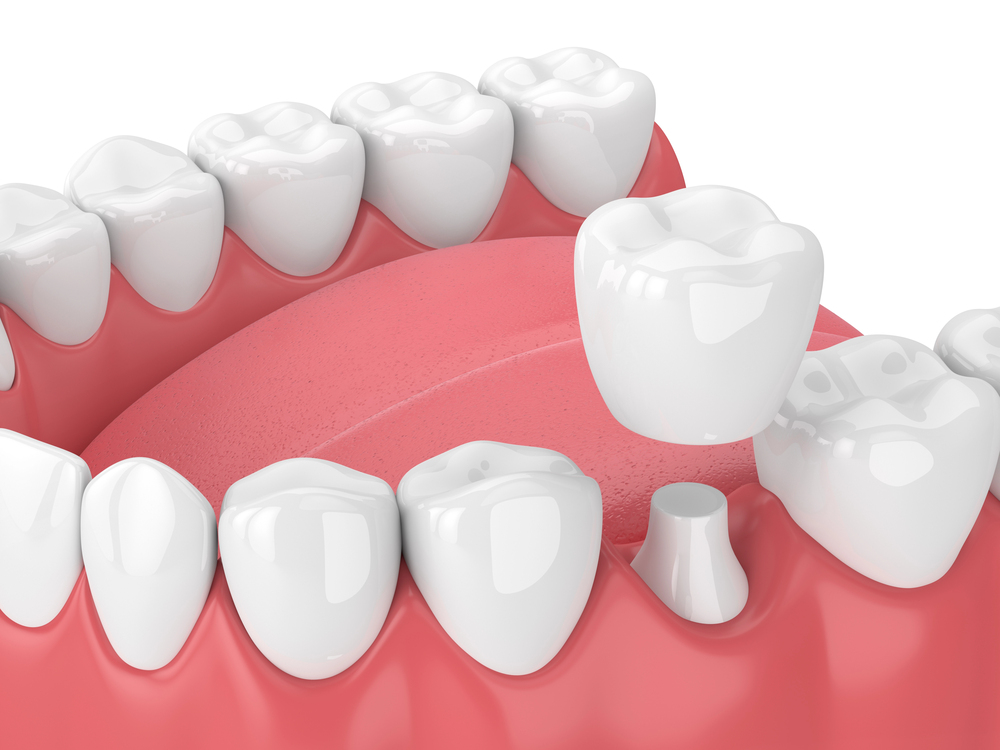
A bridge is a single restoration made of several connected pieces. The replacement tooth, called a pontic, sits in the gap. On either side, it attaches to supports that hold it securely in place. In a traditional bridge, those supports are crowns placed over the natural teeth next to the space. Once the bridge is bonded, it stays in your mouth. You don't take it out at night or clean it in a glass.
We also provide implant-supported bridges. Instead of relying on neighboring teeth, this type is anchored to dental implants placed in the jawbone. This approach can make sense when several teeth in a row are missing, or when the teeth beside the gap are healthy and you would rather not have them reshaped for crowns. Because we offer crowns, dental implants, bone grafting, and dentures under one roof, we can compare the options side by side and recommend the one that fits your mouth.
Bridges help people in a range of situations. One patient may have lost a single tooth to decay or injury. Another may have had a tooth extracted and now wants to close the space. Someone else may be missing several teeth in one area and is deciding between a bridge and a partial denture. The common thread is a gap bordered by enough support to anchor a fixed restoration.
Before recommending a bridge, we look closely at the teeth and bone around the space. Our CBCT scanner creates a three-dimensional image of your teeth and jawbone in seconds. We rotate, zoom, and label that image with you during your visit, so you can see the same details we do and understand why one option may suit you better than another.
Am I a good candidate for a dental bridge?
You may be a good candidate if you are missing one or more adjacent teeth and the surrounding teeth and gums are healthy enough to support a restoration. Healthy gums matter because a bridge depends on a stable foundation. If we find signs of gum disease, we can treat it first with scaling and root planing or periodontal maintenance before moving forward.
During your consultation, we will talk through some practical questions:
- Are the teeth next to the gap strong, or would they benefit from crowns anyway?
- How many teeth are missing, and where are they located?
- Is there enough bone to support an implant if that becomes the better route?
- Would a partial denture or a single implant meet your goals more effectively?
These answers shape the plan. Dr. Baher Khattar Mhithawi will explain each option in plain language, so you can decide with confidence.
How do I care for my bridge, and what results can I expect?
You care for a bridge much like your natural teeth, with one extra step: cleaning underneath the replacement tooth. Food and plaque can collect in the space between the pontic and your gums, so we will show you how to floss beneath it using simple tools designed for bridges. Daily brushing and flossing protect the supporting teeth, which need to stay healthy for the bridge to remain secure.
Regular cleanings and exams with our dental hygienist let us check the bridge, the supporting teeth, and your gums at every visit. When you follow good home care and keep up with checkups, a well-fitted bridge restores a complete-looking smile and makes chewing on that side feel more natural again. If anything ever feels loose or uncomfortable, call us. We offer emergency dental appointments when something can't wait.
Will insurance help pay for a bridge?
Many dental plans provide some coverage for bridges, and we accept a wide range of insurance, including Aetna, Ameritas, BCBS, Cigna, Delta Dental, Florida Combined Life, GEHA, Guardian, Humana, Lincoln Dental, MetLife, Principal, Sun Life, UHC, and United Concordia. Our team can help you understand what your plan may contribute before treatment begins.
We also welcome self-pay patients, and we accept CareCredit for those who want to spread the cost over time. For ongoing preventive care that keeps your bridge and natural teeth healthy, our in-house membership plan is available at $399 per year for preventive care or $599 per year for periodontal care.
How do I get started?
Getting started is as simple as scheduling a consultation at our Jacksonville Beach office. Our extended hours make it easier to fit a visit in before work or later in the day. We pay close attention to the details of your comfort from the moment you arrive, so you can focus on your questions. Call us today to book your bridge consultation and take the first step toward a complete, confident smile.
The process
What to expect
- 1
Consultation and Imaging
We examine your smile and use our CBCT scanner to review your teeth and jawbone with you in 3D.
- 2
Placing Your Bridge
Our team prepares the supporting teeth or implants and secures your custom bridge in place.
- 3
Ongoing Care
Regular cleanings and exams with our dental hygienist help keep your bridge and surrounding teeth healthy.
Questions
Bridges FAQs
Does insurance cover a dental bridge, and how can I pay for it?
Many dental plans include some coverage for bridges, and we accept a wide range of insurance, including Aetna, Ameritas, BCBS, Cigna, Delta Dental, Florida Combined Life, GEHA, Guardian, Humana, Lincoln Dental, MetLife, Principal, Sun Life, UHC, and United Concordia. Your exact benefits depend on your plan, so our team can help you understand your coverage before treatment begins. We also welcome self-pay patients and offer financing through CareCredit.
Will getting a bridge hurt?
Your comfort is a top priority for us at every step of bridge treatment. Our team pays close attention to how you're feeling so we can keep you comfortable, often before you even need to ask. If you have any concerns, let us know and we'll talk through what to expect at each visit.
How long does it take to get a dental bridge?
A bridge usually takes more than one visit, and the exact timeline depends on your needs and the type of bridge we recommend. We use our CBCT scanner to create a detailed three-dimensional image of your teeth and jaw so we can plan your treatment precisely and walk you through each step. Our extended hours make it easier to fit your appointments around work and family.
How long will my bridge last?
How long a bridge lasts depends on factors like your oral health, daily care habits, and regular checkups. Brushing, cleaning carefully around the bridge, and keeping up with professional cleanings and exams help protect both the bridge and the teeth that support it. During your visits, we'll check on your bridge and let you know if anything needs attention.
Am I a good candidate for a bridge, or are there other options?
A bridge may be a good fit if you're missing one or more teeth and want a fixed replacement, but the best way to know is an exam with our team. Depending on your oral health and goals, we may also discuss alternatives such as dental implants, fixed implant-supported bridges, or complete or partial dentures. We'll review your 3D images with you so you can clearly see your options and choose what feels right for you.