
Services
Restorative Dentistry
From fillings and crowns to bridges and implants, we repair damaged or missing teeth so you can chew and smile confidently.

Why choose us
Benefits of Restorative Dentistry
Restore Comfortable Chewing
We repair damaged or missing teeth so you can eat and speak with confidence again.
Options for Every Need
From fillings and crowns to bridges, dentures, and implants, we tailor care to your smile.
Precise 3D Planning
Our CBCT scanner creates a detailed 3D image so we can plan your treatment with precision.
Flexible Scheduling
Our extended hours make it easier to fit restorative care around work and family.
Insurance and Financing
We accept many major insurance plans, self-pay patients, and CareCredit financing.
A cracked molar that stings when you bite down, an old filling that finally gave way, or a gap you've been chewing around for months are all common reasons people call us, and all are problems restorative dentistry is designed to fix. At Seaside Dental of Jacksonville Beach, our goal is to bring damaged or missing teeth back to healthy, comfortable function so you can eat, speak, and smile without thinking twice about it.
Restorative dentistry is the branch of care focused on repairing teeth that have been damaged by decay, wear, or injury, and on replacing teeth that are already gone. It sits between preventive care, which keeps problems from starting, and cosmetic care, which focuses mainly on appearance. Many of our restorations do both jobs at once, returning strength to a tooth while blending naturally with the rest of your smile.
Because we see patients of all ages as a family practice, restorative care at our office covers a wide range of needs. A child may need a small filling. An adult may need a crown on a tooth weakened by a large old restoration. Someone who has lost several teeth may be looking at dentures, a bridge, or an implant-based solution. The situations we commonly treat include:
- Cavities and tooth decay that need dental fillings
- Cracked, broken, or heavily restored teeth that need crowns
- One or more missing teeth that can be replaced with bridges or dental implants
- Partial or complete tooth loss addressed with dentures, implant-supported dentures, or All-on-X dental implants
- Existing dentures that need repair or replacement
- Widespread damage that calls for full mouth reconstruction
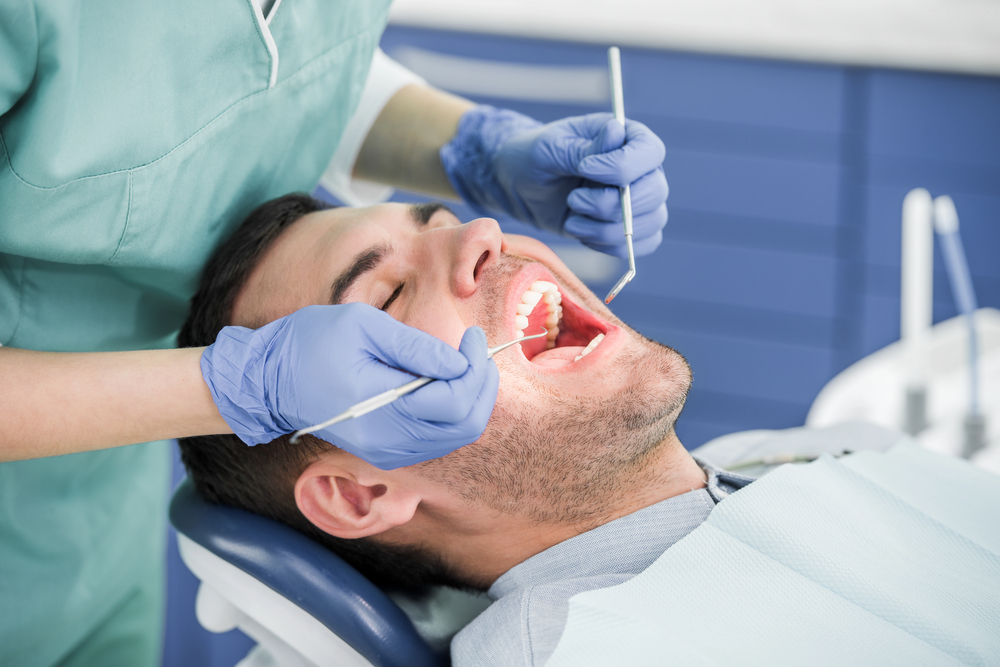
Your first restorative visit starts with understanding exactly what's going on. Dr. Baher Khattar Mhithawi and our team perform a thorough dental exam, and when it's helpful, we use our CBCT scanner to capture a three-dimensional image of your teeth, jawbones, sinuses, and facial nerves in just seconds. That image gives us a clear baseline and lets us plan treatment with real precision.
We review the scan with you on screen, rotating, zooming, and labeling it as we talk, so you can see what we see. From there, we explain your options side by side. A tooth with moderate damage might be a candidate for a filling or a crown, while a missing tooth could be replaced with a bridge or an implant. You'll understand the reasoning behind each recommendation before deciding anything.
Am I a good candidate for restorative treatment?
If you have a damaged, decayed, or missing tooth, you are very likely a candidate for some form of restorative care. The right option depends on how much healthy tooth structure remains, the condition of your gums, and the bone supporting your teeth.
Gum health matters a great deal here. If we find signs of gum disease, we may recommend gum disease treatment such as scaling and root planing before placing a restoration, so your new work has a stable foundation. For implants, the jawbone needs enough volume to support the post. When it doesn't, bone grafting can often help rebuild that support. If you need a tooth removed first, we provide simple extractions in our office, and you don't need a referral to see us for implant or denture care.
What happens after my restoration is placed?
Most patients return to normal routines quickly, though aftercare depends on the treatment you receive. After a filling, some temporary sensitivity is common. Crowns and bridges may take a few days to feel fully natural, and implants and dentures involve a longer adjustment period that we'll walk you through step by step.
Long-term results depend largely on daily habits and regular checkups. Brushing, flossing, and keeping up with dental cleanings and exams help protect both your restorations and the natural teeth around them. Patients with a history of gum disease may benefit from periodontal maintenance visits. Our extended hours, including early morning and later appointments, make it easier to stay on schedule.
How can I pay for restorative dentistry?
We accept a wide range of dental insurance plans, including Aetna, Ameritas, BCBS, Cigna, Delta Dental, Florida Combined Life, GEHA, Guardian, Humana, Lincoln Dental, MetLife, Principal, Sun Life, UHC, and United Concordia. Our team can help you understand how your benefits apply to your treatment plan.
If you don't have insurance, we welcome self-pay patients and offer an in-house membership plan at $399 per year for preventive care or $599 per year for periodontal care. We also accept CareCredit, which allows you to spread the cost of treatment over time.
If a tooth has been bothering you, or you're ready to replace one that's missing, we'd be glad to help. Call Seaside Dental of Jacksonville Beach to schedule your visit, and let our team take care of the rest.
The process
What to expect
- 1
Exam and Consultation
We examine your teeth, capture 3D images, and walk through your options together.
- 2
Personalized Treatment
Our team restores your smile with the treatment that best fits your needs and goals.
- 3
Ongoing Care
We help protect your results with regular cleanings, exams, and follow-up visits.
Questions
Restorative Dentistry FAQs
Does insurance cover restorative dentistry, and what if I don't have insurance?
Many dental plans cover part of restorative treatments like fillings, crowns, and bridges, and we accept a wide range of plans, including Aetna, BCBS, Cigna, Delta Dental, Guardian, Humana, MetLife, UHC, and United Concordia. Your coverage depends on your specific plan, so we're happy to review your benefits with you before treatment begins. We also welcome self-pay patients and offer financing through CareCredit to help make care more manageable.
Will getting a filling or crown hurt?
Most patients find restorative treatment far more comfortable than they expect, and we work hard to keep you at ease throughout your visit. Our team pays close attention to how you're feeling so you don't have to ask, and you're always welcome to let us know if you need a break or have questions. We'll walk you through each step so there are no surprises.
How long does restorative treatment take?
Treatment time depends on what your smile needs. A simple filling is often finished in one visit, while crowns, bridges, implants, or full mouth reconstruction may take several appointments. During your exam, we use our CBCT scanner to create a detailed 3D image of your teeth and jaw so we can map out a clear plan and timeline with you.
How long do fillings, crowns, and other restorations last?
How long a restoration lasts varies from person to person and depends on the type of treatment, your bite, and how well you care for your teeth at home. Regular dental cleanings and exams with our hygienist and dentist help us spot wear early and protect your restorations over time. We'll share tips to help your results last as long as possible.
How do I know which restorative option is right for me?
The best option depends on the condition of your teeth, gums, and jawbone, as well as your goals. We offer a range of choices, including fillings, crowns, bridges, complete and partial dentures, dental implants, and All-on-X implants, so we can tailor care to you. Dr. Baher Khattar Mhithawi will review your 3D images with you, explain the pros and cons of each option, and help you choose with confidence.